

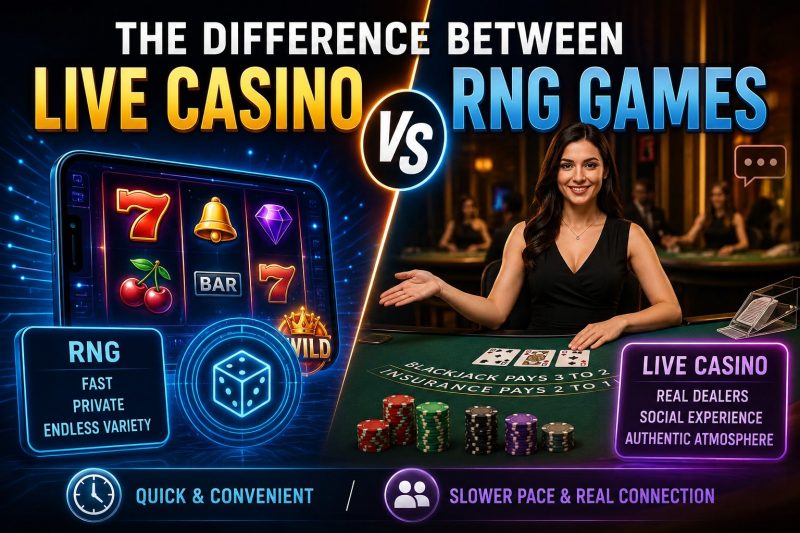
The sheer volume of choice on modern gaming platforms can be quite overwhelming if you are looking through a library for the first time. Most of the available titles will generally fall into two distinct camps: random number generator (RNG) software and live casino games.
While the fundamental rules of classic table games like roulette or blackjack remain identical across both formats, the way those games are actually delivered could not be more different. Deciding between these is simply a matter of finding the setup that best suits your preferred style of play, whether you value a solitary, rapid session or a slower, more traditional pace.
From Basic Code to Live Broadcasts
When the first online casinos surfaced in the mid-1990s, the technology was entirely dependent on digital simulation. These early platforms relied solely on virtual algorithms to mimic the rolls, spins, and shuffles of a land-based venue. For a long time, this was the only way to play remotely: it was efficient, private, and functional, but it lacked the sensory atmosphere that draws people to physical tables in the first place.
As internet speeds improved and video streaming technology became standard in everyday life, the gaming industry saw an opportunity to bridge this gap. The push toward live streaming arose from a desire to bring the human element back into digital spaces. It transformed online gaming from a purely solitary, mechanical task into a shared, dynamic experience. This innovation exploded in popularity because it finally allowed players to enjoy the reassurance of seeing real cards dealt in real time, combining the sheer convenience of a home computer with the traditional trust of a physical dealer.
How RNG Games Operate
To understand why online gaming took off in the first place, you have to look at the technology driving standard virtual titles: the Random Number Generator (RNG). When you load up a digital slot or a virtual hand of blackjack, there is no physical deck or mechanical wheel. Instead, a complex algorithm constantly cycles through millions of random number sequences in the background. The exact millisecond you click the button, the software locks in a result. Every single round is entirely isolated from the last, meaning the game has no memory of whether your previous spin was a winner or a loser.
While these algorithms ensure complete fairness, the main draw for players is the sheer flexibility of the format. Because developers are not constrained by the physical limits of a studio or a real table, RNG games offer massive variety. You can jump from a traditional card game directly into a highly complex slot featuring cascading reels, interactive bonus rounds, and unique themes.
The lack of a human dealer managing chips or waiting for other people to place their bets also means rounds are resolved in seconds. This makes RNG titles an excellent fit for anyone wanting a quick, private session. It provides a straightforward digital experience that allows you to easily stick to a set time limit, offering a bit of light entertainment without the slower social pacing of a live environment.
How Live Games Replicate the Feel of a Casino
If RNG games represent the peak of digital efficiency, live streaming flips the script by reintroducing the physical element. Instead of relying on animated graphics and computer simulations, these games connect you directly to a real table situated inside a dedicated broadcast studio.
The infrastructure required to stream live dealer casino games online is remarkably sophisticated, relying on high-definition cameras to capture every single movement in real time. You still place your wagers through a digital interface, but the actual mechanics of the game play out right in front of you on camera rather than behind lines of hidden code.
Every time a human dealer shuffles physical cards or spins a roulette wheel, multiple angles are broadcast straight to your screen. Many of these setups also feature interactive chat boxes, allowing you to speak directly with the dealer and the other players at the table. This completely bridges the gap between software and reality, giving you the authentic atmosphere of a physical venue without ever having to leave the house.
Pacing and Personal Preference
The dividing line between these two formats really comes down to how you prefer to manage your time and your bankroll during a session. With automated games, you are entirely in the driving seat when it comes to speed. If you only have ten minutes to spare while waiting for a train, a digital slot or virtual roulette wheel lets you get through a dozen rounds without any friction. However, because there are no natural pauses in the code, it is incredibly easy to lose track of time. For anyone playing automated titles, setting strict session limits and keeping a close eye on the clock is a vital habit to ensure the experience stays strictly in the realm of light entertainment.
Live tables shift you into a completely different gear. Because you are playing alongside other real people and waiting for a physical dealer to collect chips and clear the cloth, the game forces you to slow down. You get a natural breather between every single round. This slower tempo makes it far easier to keep a clear head, track your spending, and treat the evening as a relaxed, social event rather than a rapid-fire sequence of bets. Neither style is inherently superior, it is simply a matter of aligning the game with your pacing requirements for that specific day.
Game Variety and Features
Another major dividing line between the two formats is the sheer scope of the games themselves. Because RNG titles are not anchored to a physical table or limited by studio space, developers have complete creative freedom. A digital library will typically feature thousands of automated options. You are not just choosing between different card games; you are navigating through countless slot payout rates, themes, complex mechanics like cascading reels, and interactive bonus features that simply cannot be replicated with a physical deck.
Live gaming takes a much more focused approach. Since every table requires real equipment, complex camera setups, and a professionally trained human dealer, the variety naturally leans toward tradition. While developers have recently introduced game-show style titles featuring interactive wheels and live hosts, the core of the live floor is heavily dedicated to classic table games. If you are looking for constantly evolving mechanics and dynamic visual themes, automated games will definitely suit you better. However, if you prefer the familiar and structured rules of a classic casino setup, the live lobby provides exactly what you need.
Which Option is Right for You?
Deciding between an automated spin and a live roulette table is rarely a permanent choice. The real advantage of modern gaming platforms is that both systems sit side by side in the same library, allowing you to flip between them depending on your mood.
If you only have a brief window of free time and want to explore vibrant themes or complex slot mechanics in total privacy, RNG titles provide brilliant, frictionless entertainment. On the other hand, if you want to settle in for the evening and fancy the social interaction of traditional table rules without the hassle of a dress code or a cab ride, a live broadcast is the obvious choice. It all boils down to matching the tempo and the visual style of the software with the exact experience you are looking for on the night.
Leave A Comment