

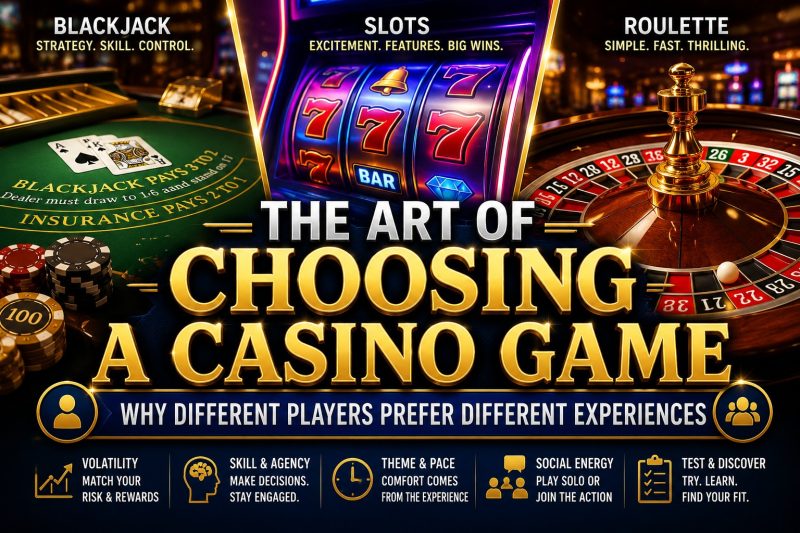
Selecting a casino game might appear straightforward at first, until players discover that all of their individual preferences are taking an effective role in making decisions about tables, reels, or live rooms. Budget, time constraints, risk appetite, and evening mood all impact decisions about casino gambling games.
A careful beginner may start by checking whether operators clearly operate under international license through https://kaszinóútmutató.com/kulfoldi-online-kaszino online casinos, where rules and payout information are easier to compare.
The game chosen after that research usually reflects temperament more than luck. Some players want five quiet minutes; others want a long session with choices on every round. Across Hungary, https://kaszinokmagyarorszagon.com/ casinos can appeal to both types, because the best fit depends on experience design, not just advertised jackpots.
Stakes, Rules, and the First Spark of Curiosity
Money changes the dynamic of any game, even at lower stakes levels. Playing low-stakes slots encourages experimentation, as each spin can become an opportunity to discover features without turning every turn into an effortful calculation. Table games that require minimum bets require players to consider pace and session length before starting play, making these table games ideal for novice players who enjoy learning rules such as blackjack or baccarat, as each hand has an easily recognizable structure.
Whoever desires instant action may opt for video slots, crash games, or quick roulette instead. Clarity in gameplay usually determines this choice: does the screen explain what is going on, how it can be won, and when the round ends? Once these fundamentals suit a player’s comfort zone, the game no longer feels like an unknown and begins to feel more like an option.
Many regulars build their shortlist based on moments like this when their first few rounds made sense without an instruction book in sight; confidence will eventually follow, though an early starting point might help. Start slowly, but start small for the best results.
Volatility Shapes the Mood at the Table
Volatility is often an underrated characteristic of casino games. A high-volatility slot may go quiet for a while before delivering an unexpected feature or prize that captures players who enjoy suspense; these may prefer longer stretches without tangible progress, while others seek steady feedback. They prefer games where small wins, push results, or near-term decisions keep the session moving forward.
Roulette with outside bets, low-variance video poker, or certain blackjack tables tend to provide more measured swings because these preferences offer less dramatic swings; none is necessarily more sophisticated.
Experienced players must determine which jackpot teaser best meets their emotional needs; one person’s jackpot teaser might bore another who craves constant interaction. They then determine their desired type of game: rollercoaster or walk? A simple test helps: If ten uneventful rounds feel part of a story rather than wasted time, then higher volatility might suit. Alternatively, opt for smaller, more frequent outcomes and slower-stakes games instead.
Skill Seekers Look for Agency
Some players need something tangible to occupy their minds when playing, even though graphics might look stunning. Blackjack provides basic strategy, while poker variants allow hand selection, and sports-themed casino games sometimes prompt timed decisions, which give a sense of agency to players.
Participation is what draws players to these sessions; each decision makes the player feel present; hence, each session becomes more of a series of judgments than of revelations; other players find this mental work draining. After an exhausting day, players might crave vibrant color, music, and automatic rounds that require no planning.
Both approaches can work effectively when limits are established beforehand – what matters is whether decisions add pleasure or pressure during the play session; agency can alter how losses feel differently too; missing double down can sting while blank spin simply passes by without noticeable effects; knowing your preferred reaction beforehand may prevent frustration from the first stake ever being placed!
Theme, Sound, and Pace Create Comfort
Design does more than decorate a game; it sets expectations. A mythology slot with loud music creates spectacle, while an elegant card table communicates order and focus. Players usually opt for themes that complement their mood – fast animations can boost focus during short breaks! Muted interfaces can make longer sessions less taxing on players’ minds and bodies.
Pace plays just as significant a role as imagery; auto-play features are ideal for people seeking smooth repetition, while live dealer games cater to players who enjoy waiting for cards, chatter, and human gestures. Small friction points also matter: button placement, bet menus, mobile readability, and bonus rounds.
A game may not necessarily offer the highest headline payout but may simply feel comfortable for you over time; one player might prefer neon chaos, for others, plain felt with soft sounds and slow dealers may provide greater comfort – the right atmosphere keeps attention steady without turning play into noise.
Social Energy Changes the Same Game
Social context can make all the difference when playing roulette – solo roulette can feel private and efficient; live roulette with a dealer/chat window feels more like an event shared among multiple participants, and some players enjoy its energetic feel. People tend to enjoy watching other bets being placed, hearing dealer patter, or following the beat of real shoes, while some prefer privacy while establishing or testing out new budgets; anonymity helps reduce self-consciousness, while faster digital rounds leave less opportunity for distraction.
An individual might switch up their gaming preferences depending on their day: after work, an interactive live game might make for the ideal way to pass time; during their commute home from work or school, however, mobile slots may provide better entertainment value. Deciding wisely involves paying attention to whether company, speed, or privacy will make each twenty-minute session more satisfying; community features may nudge behavior too – disciplined players treat chat and leaderboards as atmosphere instead of pressure; should another player’s big win make you chase after him or her, then switch back for something simpler – fun should never depend on keeping up with someone else!
Testing Preferences Without Forcing a Style
Personal preferences become easier to discern when players experiment deliberately instead of randomly trying new games. An excellent strategy would be experimenting with three contrasting formats using an equal budget: slots, table games, and live dealer rounds are great places to begin testing out different styles and playing for yourself!
Make note of what was comfortable, confusing, slow, rushed, or too intense – be honest when answering this question; an appealing game may still not suit your attention span or risk tolerance, while one with less lavish presentation could become your go-to game because it suits you better.
Before testing, set time and loss limits before beginning, stopping when either limit arrives to ensure an efficient experiment without your emotions getting in the way. If it remains uncertain which game would suit best for your playstyle best, try picking the game you understand quickest; stake lightly; then evaluate after 10 rounds to assess any change or insight gained.
Over time, patterns will emerge. Perhaps you find you only enjoy choice when the rules are straightforward, or find high volatility only enjoyable at low stakes – these insights may prove far more helpful than any list of trending titles. Keep your rotation short, remove games that make you impatient, and evaluate your choices as your budget, schedule, or taste changes.
When selecting three titles at random for play this session, choose three that can provide calmness, focus, and spectacle before selecting just one from which to reopen tomorrow – then save its result beside your limit so your decision-making begins from memory, not marketing or a restless scroll through lobby after lobby. Start there.
Leave A Comment